Moon Phases and Their Meaning: A Ritual Guide to the Lunar Cycle
Discover the moon phases meaning, from new moon to waning crescent, with a simple ritual practice and journal prompt for each phase of the lunar cycle.
19 October 2026 · 7 min read

In this guide
- How the lunar cycle works
- 1. New moon: beginnings and intention
- 2. Waxing crescent: hope and first steps
- 3. First quarter: action and decisions
- 4. Waxing gibbous: refinement and patience
- 5. Full moon: illumination and release
- 6. Waning gibbous: gratitude and sharing
- 7. Last quarter: letting go and forgiveness
- 8. Waning crescent: rest and surrender
- Putting the lunar cycle into practice
- A beautiful way to keep the practice
- A gentle closing
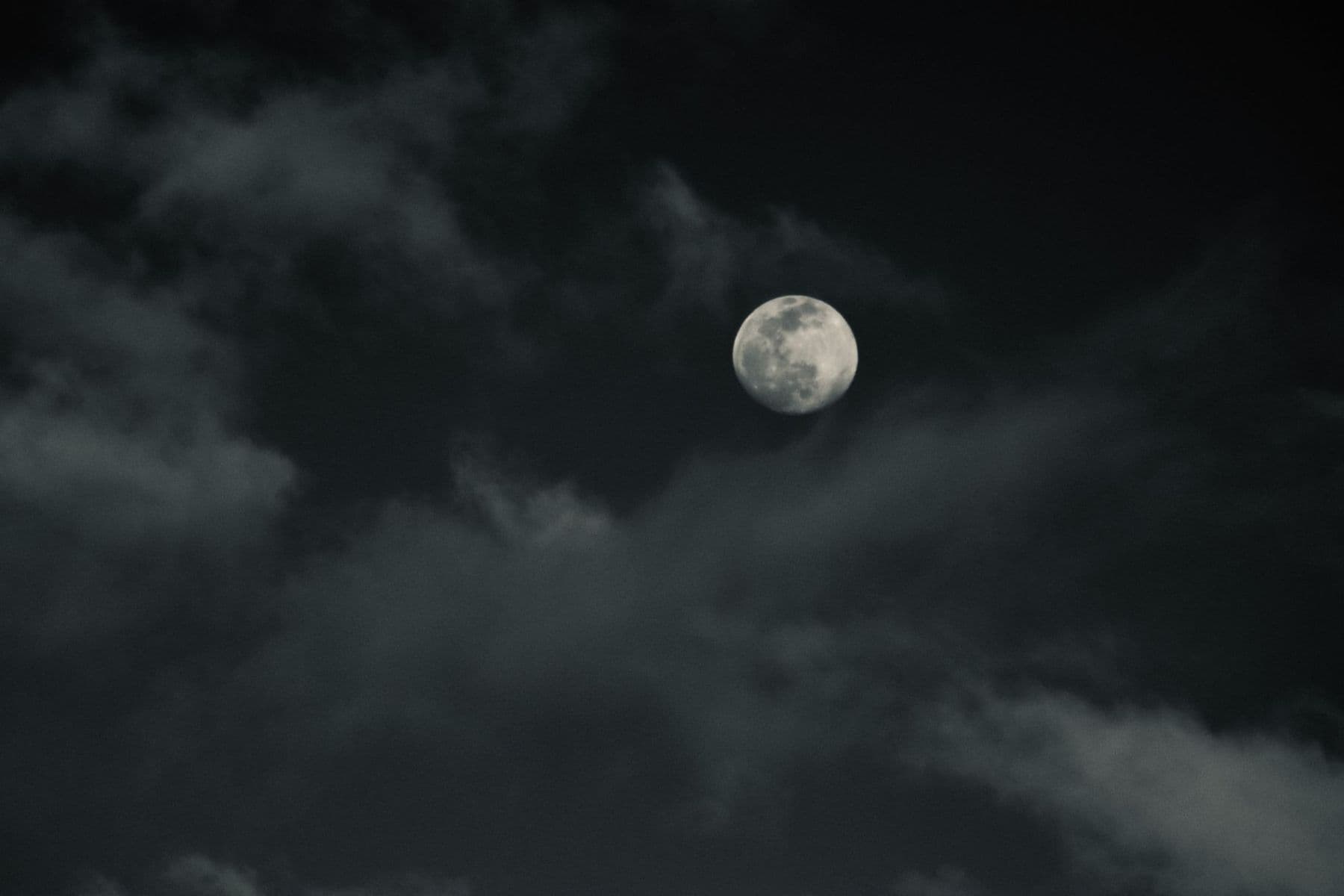
Every month, the moon moves through the same quiet sequence: dark, then a sliver, then half, then full, and back again. People have used this rhythm to mark time, plant crops and tell stories for as long as anyone has looked up at night.
Today, many people use the lunar cycle as a gentle structure for reflection. Instead of one big New Year's resolution, you get a small, natural checkpoint every few days. Each phase carries a traditional theme, and each one offers a simple way to pause and check in with yourself.
This guide walks you through all eight moon phases. For each one, you'll find what's physically happening in the sky, the ritual theme traditionally associated with it, a short practice and a journal prompt. Use it as a map, not a rulebook.
How the lunar cycle works
The moon doesn't produce its own light. Half of it is always lit by the Sun. What changes over the month is how much of that lit half we can see from Earth, as the moon travels around us.
One full cycle, from new moon to new moon, takes about 29.5 days. This is called a synodic month. The cycle has two halves:
- Waxing: the lit portion we see grows, from new moon to full moon.
- Waning: the lit portion shrinks, from full moon back to new moon.
In the Northern Hemisphere, a waxing moon is lit on the right side and a waning moon on the left. In the Southern Hemisphere, it's the other way around. The phases themselves, and their timing, are the same everywhere.
Symbolically, the waxing half is often linked with growth, building and action, and the waning half with release, rest and reflection. Moon rituals are a reflective practice, not a prediction or a promise. Their value lies in rhythm and attention: a reliable, beautiful reason to stop and notice your own life.
The moon never rushes from one phase to the next. You don't have to either.
1. New moon: beginnings and intention
In the sky: The moon sits roughly between Earth and the Sun, so the side facing us is dark. It rises and sets with the Sun and is effectively invisible.
Traditional theme: Fresh starts, quiet planning and setting intentions. The new moon is the blank page of the cycle.
Practice: Light a candle in a safe holder, sit somewhere quiet and write one to three intentions for the month in the present tense. Keep them small enough to actually live. Our full guide to setting new moon intentions includes 25 examples and a step-by-step ritual.
Journal prompt: What do I want to grow in my life this month, and how do I want to feel while I grow it?
2. Waxing crescent: hope and first steps
In the sky: A thin crescent appears low in the western sky shortly after sunset, growing a little wider each evening.
Traditional theme: Hope, commitment and taking the first small step. The seed has been planted, and the first green shoot is showing.
Practice: Look at your new moon intentions and choose one tiny action for each. Do at least one of those actions within the next two days. If you can, step outside at dusk and look for the crescent as a reminder.
Journal prompt: What is one small, brave step I can take this week toward what I want?
3. First quarter: action and decisions
In the sky: About a week after the new moon, exactly half of the moon's visible face is lit. It rises around midday and is high in the sky at sunset.
Traditional theme: Momentum, challenge and decisions. This is often the point where enthusiasm meets reality, and you choose whether to adjust or push through.
Practice: Do a short honest check-in. Which intention is moving? Which one feels stuck? Name one obstacle and one change you can make to get around it. Sometimes the best decision is to make the step smaller.
Journal prompt: What is getting in my way right now, and what would I do if I trusted myself to handle it?
4. Waxing gibbous: refinement and patience
In the sky: More than half of the moon is lit and still growing. It rises in the afternoon and is visible for much of the evening.
Traditional theme: Refining, adjusting and staying patient. The work is nearly ripe, but not finished. It's a time to tend rather than force.
Practice: Review your progress since the new moon and write down three small wins, however minor. Then choose one thing to fine-tune: a habit, a routine or the wording of your intention.
Journal prompt: What is quietly working in my life that I haven't given myself credit for?
5. Full moon: illumination and release
In the sky: The moon is on the opposite side of Earth from the Sun, so its whole visible face is lit. It rises around sunset and sets around sunrise.
Traditional theme: Culmination, clarity and letting go. What you've been building is now visible, and so is what's holding you back. Many traditions treat the full moon as the main moment for release.
Practice: Write a list beginning with I am ready to release, then let it go symbolically by tearing it up, crossing it out or dissolving it in water. If you prefer to burn it, use a fireproof bowl outdoors with water nearby. Our step-by-step full moon release ritual walks you through the whole process, including a 5-minute version.
Journal prompt: What has come to light for me this month, and what am I ready to set down?
6. Waning gibbous: gratitude and sharing
In the sky: Just after full, the moon is still mostly lit but beginning to shrink. It rises after sunset, a little later each night.
Traditional theme: Gratitude, integration and sharing what you've learned. The harvest is in, and now you take time to appreciate it.
Practice: Write a short gratitude list focused specifically on this cycle. Then share something: a kind message, a piece of advice, a thank-you to someone who helped you. Gratitude often feels fuller when it leaves the page.
Journal prompt: What did this cycle teach me, and who or what am I grateful for because of it?
7. Last quarter: letting go and forgiveness
In the sky: About a week after the full moon, half of the visible face is lit again, this time the opposite half. It rises around midnight and is visible in the morning sky.
Traditional theme: Release, forgiveness and clearing space. Where the full moon reveals, the last quarter is the follow-through: actually loosening your grip.
Practice: Clear one physical space, like a drawer, your inbox or your bag. As you do, reflect on one thing you're ready to forgive, in yourself or someone else. Forgiveness here doesn't mean excusing; it means choosing to stop carrying it.
Journal prompt: What am I still holding onto that no longer deserves my energy?
8. Waning crescent: rest and surrender
In the sky: A thin crescent rises shortly before dawn in the eastern sky, growing thinner each morning until it disappears at the next new moon.
Traditional theme: Rest, stillness and surrender. This is the quiet exhale before the cycle begins again, sometimes called the balsamic moon.
Practice: Do less on purpose. Go to bed earlier, take a slow walk, sit in silence for ten minutes or take a warm bath. Resist the urge to plan. Let yourself recover before the new moon asks you to begin again.
Journal prompt: Where in my life am I being asked to rest instead of push?
Putting the lunar cycle into practice
You don't need to do something at all eight phases. In fact, trying to can turn a calming practice into one more thing to keep up with. Here are three ways to work with the cycle, depending on how much time you have.
The essential rhythm
Focus on the two main moments: the new moon for intentions and the full moon for release. Two rituals a month, about two weeks apart, is a beautiful and sustainable practice.
The four-point rhythm
Add the first quarter and last quarter as short check-ins. That gives you one touchpoint roughly every week: set, act, release, clear.
The full eight-phase rhythm
Use each phase's journal prompt, even if it's just a sentence or two. This works well if you enjoy daily or near-daily journaling and want a deeper, more detailed record of each month.
Whichever you choose, it helps to keep your notes in one place. Over several months, you'll start to see patterns: which phases feel easy, which feel heavy and how your intentions evolve.
A beautiful way to keep the practice
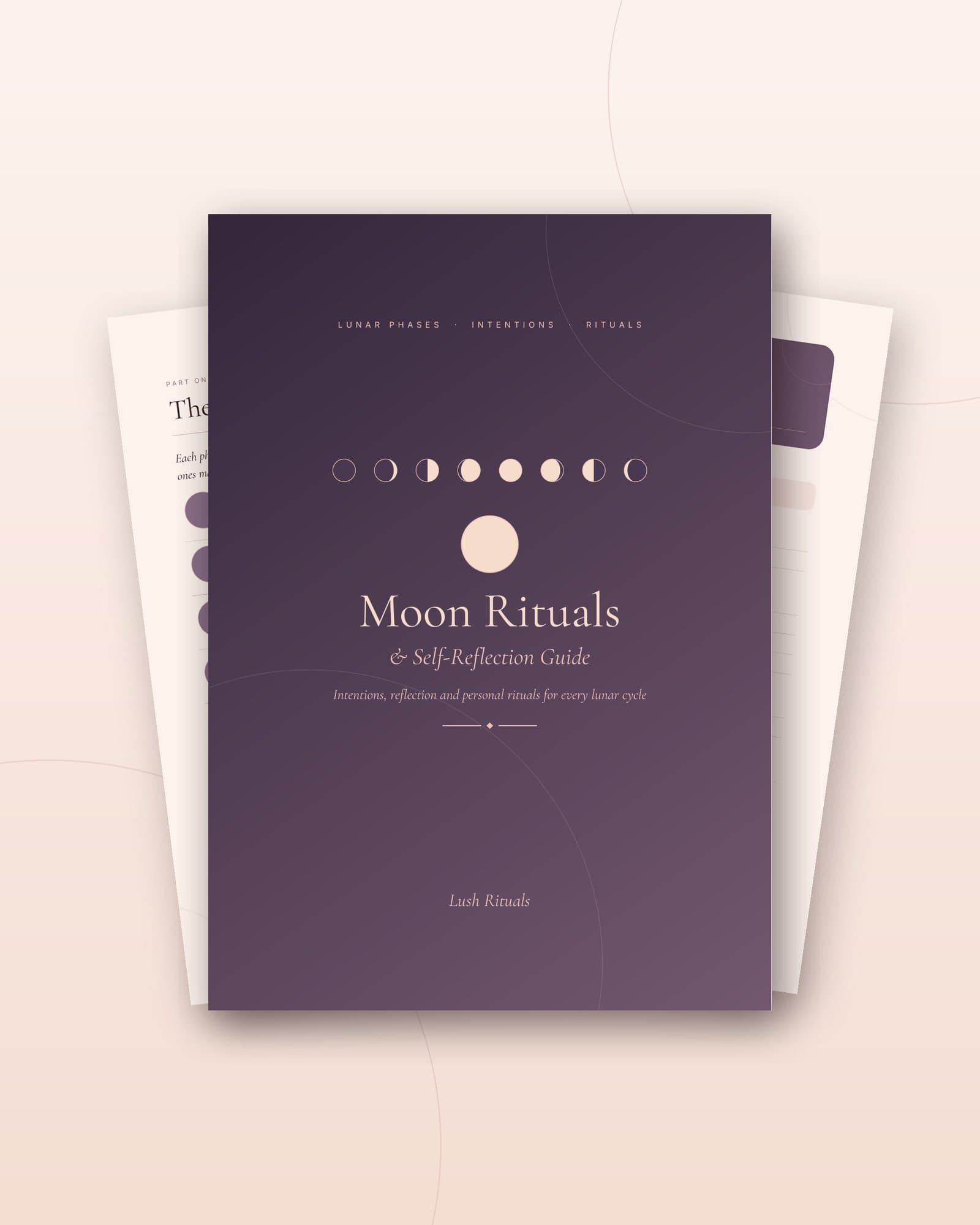
If you'd like a structured companion for this rhythm, the Moon Rituals & Self-Reflection Guide is an undated, fillable and printable PDF journal with 13 lunar cycles, guided new and full moon rituals, intention pages and monthly trackers. It also includes a bonus Moon Phase Cheat Sheet, a quick reference to keep beside you as the month unfolds. You can start in any month, fill it in on a tablet or computer, or print it at home.
If you want to go deeper than the moon, The Complete Inner Journey brings together the Moon Rituals guide, the Self-Love Ritual Kit and the 30-day Shadow Work Journal, so your monthly rhythm, daily self-love practice and deeper inner work live side by side.
A plain notebook is a perfectly good place to begin, too.
A gentle closing
The moon has been moving through these same eight phases for longer than anyone can remember, and it will keep doing so whether you mark them or not. That's part of what makes it such a comforting companion. There's always another new moon, another full moon, another chance to begin or let go.
So tonight, step outside or look out of a window and see where the moon is in its cycle. Notice which phase you're in, and ask yourself the question that belongs to it. Then let that be enough for now.
Continue your practice
Moon Rituals & Self-Reflection Guide
Undated moon journal with 13 lunar cycles, new & full moon rituals, intention pages and monthly trackers. Fillable & printable PDF.
- Instant download — the link arrives in your inbox
- Fill in on your tablet or print at home
- Yours to return to, again and again
Free download
The Shadow Work Starter
Seven days of gentle prompts, a grounding ritual and a reflection page — a printable PDF to begin your inner work tonight.
The practices in this guide are for reflection and self-care. They are not a substitute for professional medical or mental health support.
Keep reading